

flangu is a flashcard app for language learners. I built it because adding new English words to Anki by hand was too tedious to keep up. Each word meant Google Translate, then Anki, then adding context. So I made an app that builds the card from one translation.
Why adding words by hand didn't work for me
I started learning English in primary school, at about seven, and had classes through school and some at university. After I graduated, my English got much worse, because I wasn't practicing. My only contact with English was browsing the internet and watching YouTube or Netflix with subtitles. So I started learning and using English on purpose. I switched my phone and everything else to English and talked with strangers on Tandem and HelloTalk. I also practiced writing now and then and used apps like Busuu and Duolingo.
I wanted to keep the new words from my practice. I tried Anki, which I had already used for a long time for learning other things, and I tried writing words on paper. In the end I stopped, because adding words was too tedious: Google Translate or DeepL first, then paste into Anki. Making a good card, with context, took even longer.
I liked Anki for its simplicity, and in my experience it works really well if you stay consistent: add new cards and review them every day. It's open source and popular, with a friendly community and a lot of add-ons. For me, the add-ons were both a strength and a weakness. I usually didn't use them, because I had to find each one and set it up (they say it's simple, but it's still too much for my lazy brain). I also couldn't always tell whether a source was trustworthy or whether an add-on really worked. And most add-ons only run in the desktop app: the iPhone app doesn't support them at all. The app also felt dated to me. For someone new, I think it lacks a clear introduction: the Anki manual is thorough, but a beginner only needs the basics.
How a portfolio project became an app
flangu started as a portfolio project. I was building different apps to show on my personal page and CV. A flashcard app where you add a card by translating a word seemed like a good showcase. It did in one step what I was doing by hand with Google Translate and Anki.
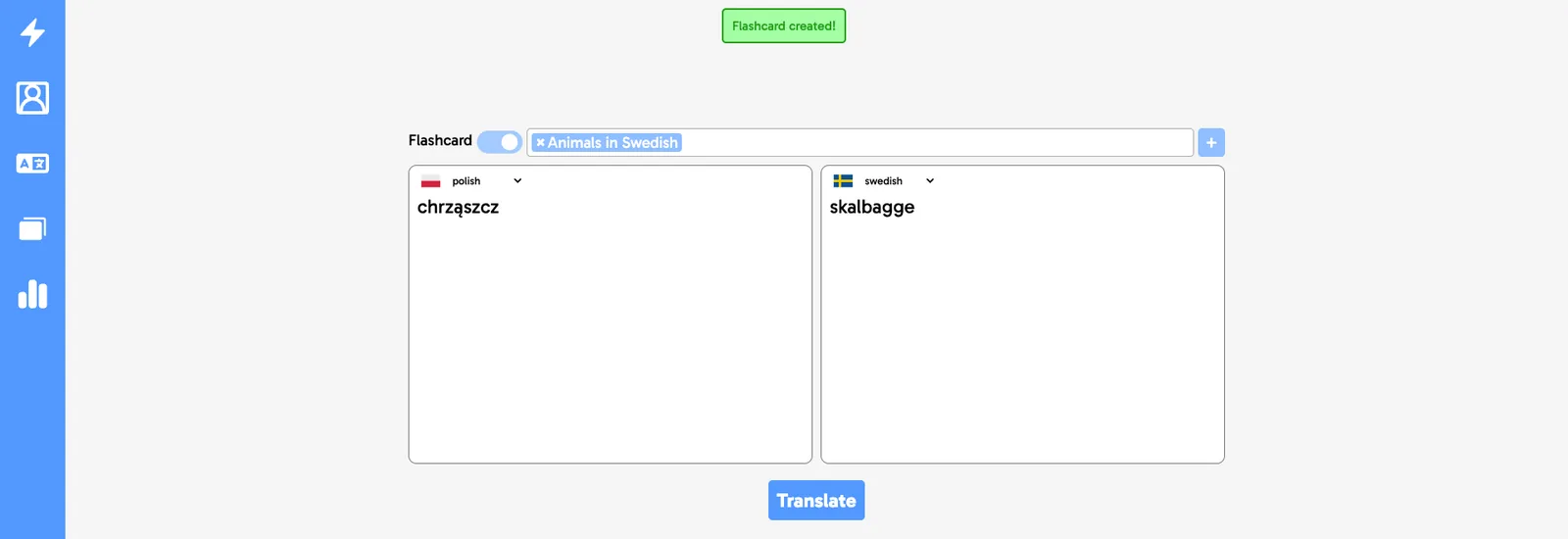
It was a simple project, with a spaced-repetition algorithm I wrote myself.
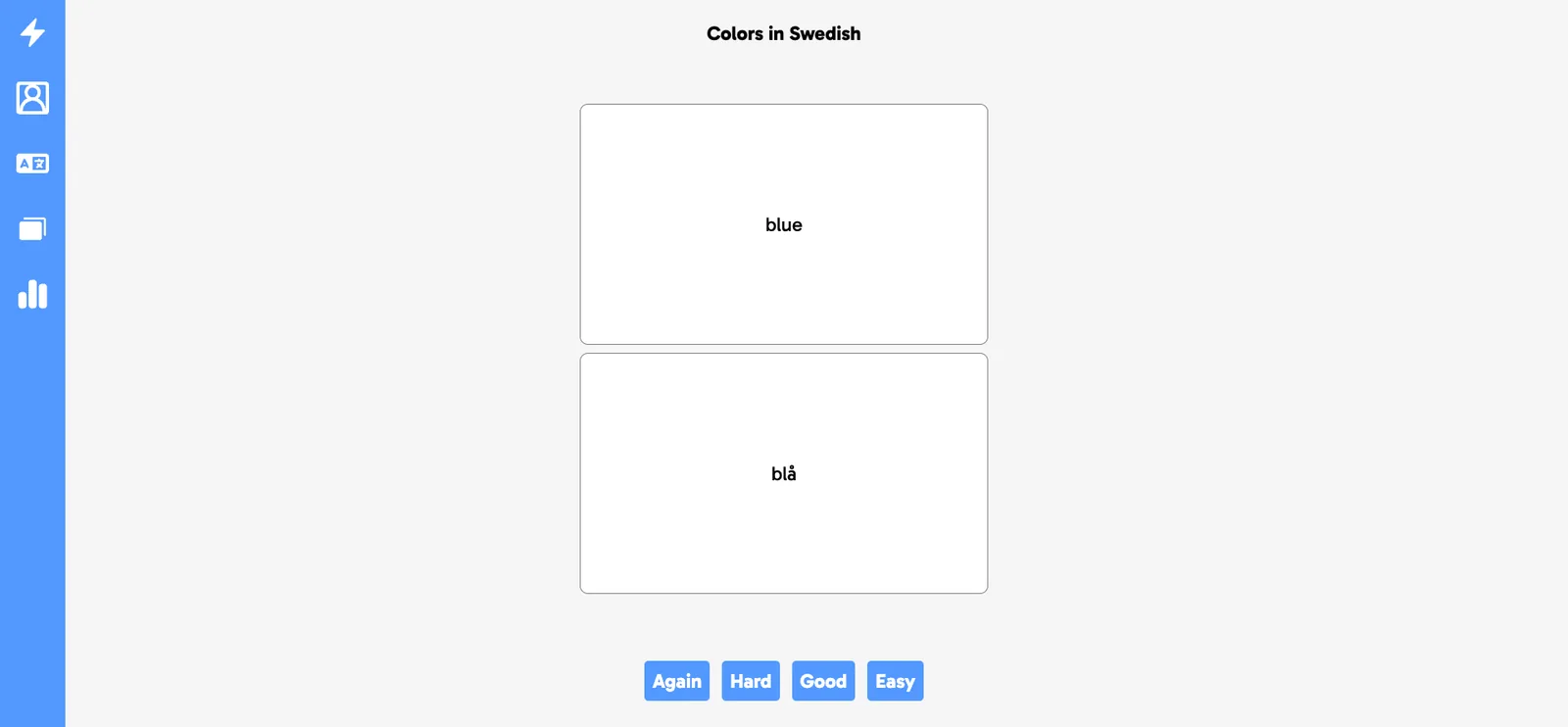
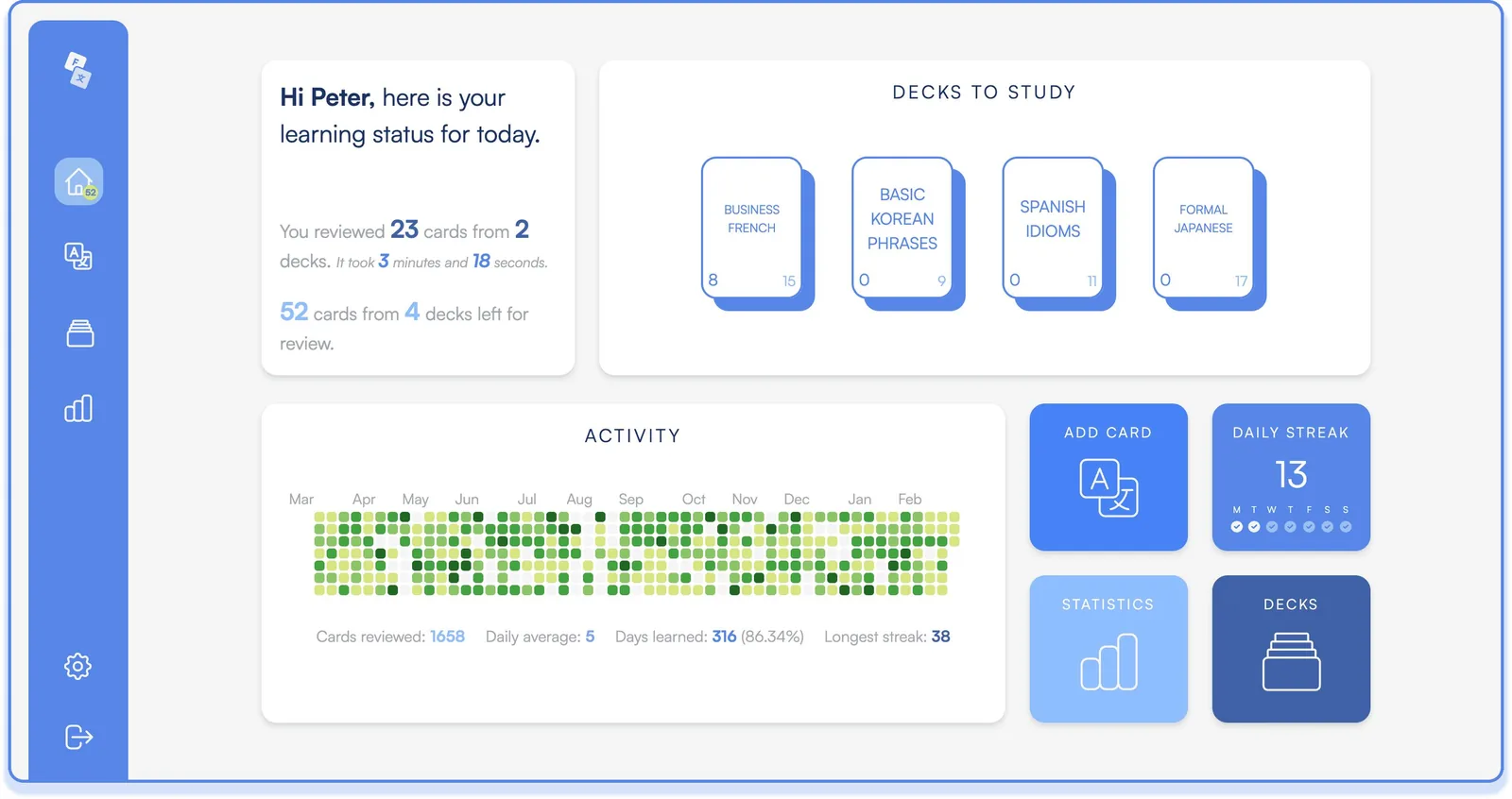
Later I came back to it to make it a real product. I built it as a web app first. Over time I realized that a flashcard app works best on a phone, and as a solo developer, I also had to focus on one platform at a time to build a quality product.
So I rebuilt it as an app for phones. I learned a lot again, and I had to fit the work around a full-time job and my personal life.
Building it taught me a lot about making products: a quality product is much more complex to build than it seems.
Why another flashcard app
In my opinion, the market for vocabulary and language-learning apps is very crowded, but it still lacks quality products with a simple mechanism. That's especially true of spaced-repetition and flashcard apps. Many of them feel rushed to me, and many seem abandoned. Others feel overcomplicated, with mascots or pets and a flashy interface.
While building flangu, I took inspiration from Mochi, a flashcard app that combines Markdown notes with spaced repetition. I think of it as an elegant alternative to Anki. I wanted to build one too: professional, elegant and made for language learners.
What I built, and the trade-offs
At first, the core idea was just translation, with nothing else on the card. Then AI became good enough to add high-quality context too. Now you translate a word once, and flangu builds a complete card with the meaning, pronunciation and example sentences (what a card contains). It works in 31 languages for now, in any pair (supported languages).
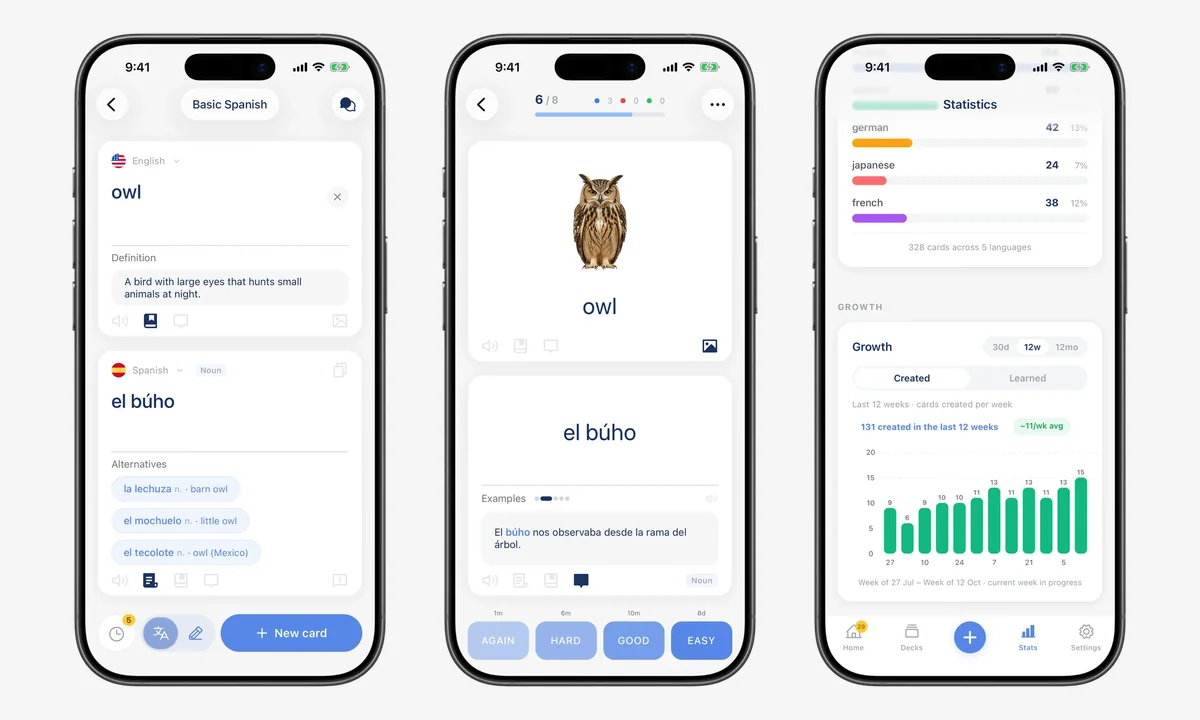
The first version used my own basic variant of the SM algorithm. flangu now schedules reviews with FSRS-6, a modern open-source algorithm. As far as I know, it's the most efficient spaced-repetition algorithm (its supportive community is an extra plus). More in FSRS in flangu.
Early tests showed me that AI makes mistakes, so I built a quality-control system around it. Every translation is checked as the card is created, and content is checked again regularly to catch errors. Fixes are applied automatically, even to cards you've already saved (how flangu checks card content).
I want flangu to be a tool anyone can use, so the core app is free, with unlimited flashcards and reviews and no ads. flangu Pro is optional for users who want some extra features (Free and Pro). I believe (or rather hope) the freemium model will still cover the running costs, even with this much in the free version.
Today, flangu runs on iPhone and Android phones, with the interface in English. The plan is to make it a universal tool: on iPad and desktop too, with the interface in many languages. It should also be easy to import and export cards from different sources. I build flangu alone, so this will take time.
Who flangu is for, and who it isn't for
flangu is for people who want to learn vocabulary. It's also for people who already learn with a spaced-repetition app like Anki and are tired of making cards by hand, missing features or setup.
It isn't for people looking for one app as their only way to learn a language. flangu is a supporting tool. You won't learn a language just by creating cards and remembering words: you need to practice speaking, grammar and the rest somewhere else.
Where flangu is going
Next on the list: import and export with CSV, Anki and Quizlet, and ready-made language decks.
If you have an idea or a problem, you can reach me in three ways. Use the contact form in the app or on the website, flangu's Discord, or email at contact@flangu.app. I'd like Discord to become a community of people who like the project and have ideas for it. You can read more about flangu and me, or find facts and screenshots on the press page.